
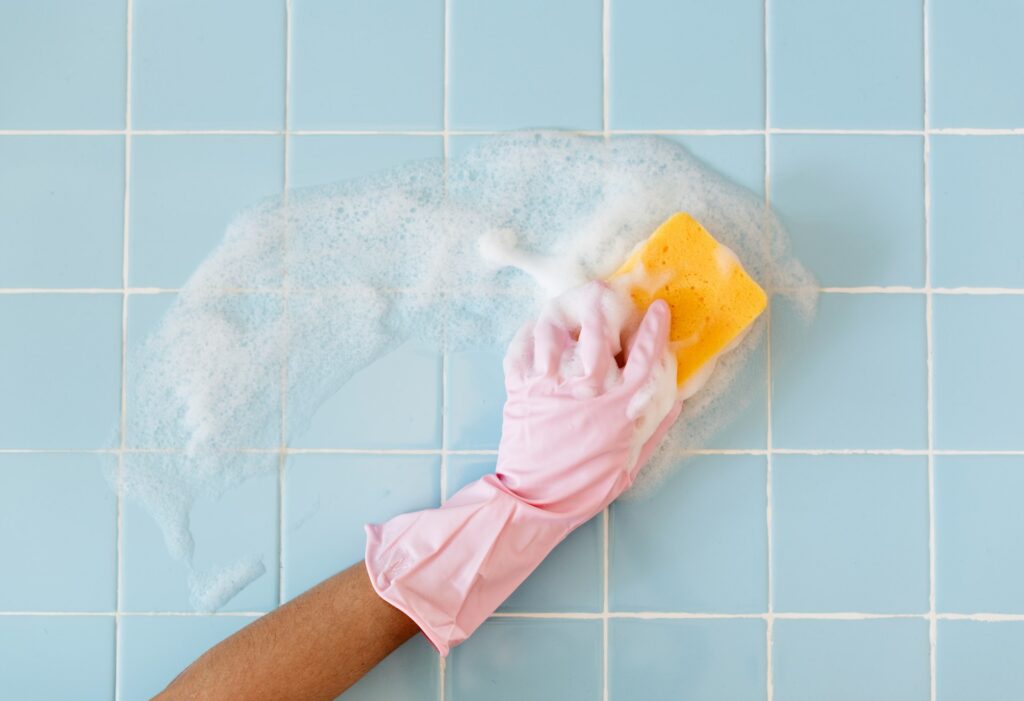
If you’re looking into tile and grout cleaning in Roseville because your grout seems dirty again almost immediately after you clean it, the problem usually isn’t that you need to mop more often. Tile and grout behave differently. A mop may clean the face of the tile while leaving soil, residue, and dirty water behind in the lower grout lines. Once that happens repeatedly, the floor can look dingy again soon after it dries.
Before reaching for a stronger cleaner or spending another afternoon scrubbing, it’s worth figuring out what is actually making the grout look dirty. Sometimes it’s embedded soil. Sometimes it’s cleaning product residue. In other cases, the grout itself is worn or damaged and cleaning isn’t going to correct it.
Why Grout Gets Dirty Faster Than Tile
Most tile floors have a fairly smooth surface that’s easy to wipe. Many cement-based grout lines are different. They’re porous, slightly recessed, and more likely to hold onto what gets tracked or spilled across the floor.
That difference becomes obvious in busy areas. Kitchen grout picks up cooking residue and spills. Entryways collect outdoor dirt from shoes. Bathroom grout deals with soap residue and moisture. Even a floor that’s mopped regularly can gradually develop darker lines through the areas people use most.
One useful test is to compare grout in the middle of the room with grout underneath a cabinet edge, near a wall, or in another protected spot. If the less-traveled grout is noticeably lighter, you may be looking at accumulated soil rather than a naturally darker grout color.
Mopping Can Move Dirt Into the Grout Lines
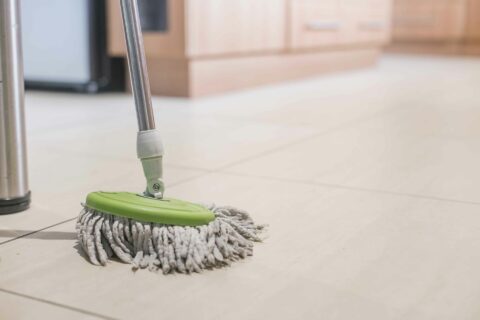
A mop loosens dirt, but that dirt still has to go somewhere.
As mop water becomes dirty, some of it settles into the joints between the tiles. Because grout typically sits slightly lower than the tile surface, those lines become natural collection points.
The floor may look much better while it’s wet. Then it dries and the darker grout becomes visible again.
This is one reason repeatedly going over the same floor with the same bucket of water doesn’t necessarily produce a deeper clean.
The Tile Council of North America’s guidance on cleaning grout emphasizes removing the dirty cleaning solution from the grout rather than allowing it to remain in the joints. Their guidance recommends extracting dirty water and following with clean rinse water.
For routine home cleaning, you probably aren’t pulling out extraction equipment every time you mop. The important takeaway is simpler: loosening soil and actually removing it are two different things.
Your Floor Cleaner Could Be Leaving Something Behind
More cleaning product doesn’t always mean a cleaner floor.
Using too much detergent can leave a film behind after the water evaporates. That residue may make tile look dull, but it can be even more noticeable along grout lines where liquid collects.
Residue also gives new dirt something to stick to. The result is frustrating: you mop, the floor improves temporarily, and then it seems dirty again sooner than expected.
If the entire floor feels slightly tacky or looks hazy rather than just dirty, cleaner buildup deserves consideration.
Follow the product directions rather than adding an extra splash to the bucket, and use a cleaner appropriate for the actual tile material. Ceramic, porcelain, and natural stone don’t necessarily tolerate the same products.
Look at the Pattern Before You Start Scrubbing
Where the discoloration appears often tells you more than how dark it is.
Grout that’s darkest along normal walking paths usually points toward tracked-in soil and repeated foot traffic. Darkening concentrated around a stove or kitchen work area may have an oily component.
Bathroom discoloration is different. Soap residue, cosmetics, moisture, and poor drying conditions all affect how those surfaces look.
A floor with fairly even discoloration throughout a large area may simply be overdue for deeper cleaning. If only isolated joints are affected, look closely at what happens in those spots before treating the entire floor.
And if the grout is cracked, loose, missing, or crumbling, stop treating it as a cleaning problem. Cleaning removes contamination. It doesn’t repair failing grout.
Why Scrubbing Harder Isn’t Always the Answer
Once grout stays dark after ordinary cleaning, the natural reaction is to use a stiff brush and stronger chemicals, but that isn’t automatically the best next move.
The right cleaning method depends on both the tile and the grout. A product that’s acceptable for one surface may be a poor choice for another, particularly with natural stone or specialty finishes. Abrasive tools may also affect some surfaces.
Start with the least aggressive method appropriate for your floor and test an unfamiliar cleaner in a small area first.
If you’ve already cleaned the same grout repeatedly without a meaningful change, another round of aggressive scrubbing may simply be repeating a method that isn’t reaching the buildup.
When Tile and Grout Cleaning in Roseville Makes Sense
Professional cleaning becomes worth considering when the difference between the tile and grout keeps getting more noticeable despite regular floor care. It also makes sense when a large tiled area would require extensive hand scrubbing or when the grout briefly looks cleaner while wet but returns to the same dark appearance once the floor dries.
Squeaky Clean’s carpet, tile and grout cleaning service uses professional equipment and cleaning agents to reach dirt within porous grout lines rather than relying on surface mopping alone.
Professional cleaning also gives you a clean baseline. Once the embedded soil and accumulated residue are removed, ordinary maintenance becomes much easier to evaluate. You can see what color the grout actually is and notice new buildup before it becomes severe.
Does Dark Grout Always Mean It’s Dirty?
No. Grout changes over time, and not every dark area will return to its original appearance through cleaning alone. Discoloration may come from staining that has penetrated deeply into the material. Older grout may have uneven coloration from years of wear. Previous cleaners or treatments can also affect its appearance.
If dirt is causing the color change, deeper cleaning should address that dirt. If the grout is damaged, permanently stained, or deteriorating, cleaning isn’t the same thing as restoration or replacement.
A floor doesn’t need to look brand new for cleaning to be worthwhile. The better question is whether removable buildup is making it look worse than it should.
How Often Should Tile and Grout Be Professionally Cleaned?
There isn’t one perfect schedule for every floor. A lightly used guest bathroom and a busy kitchen obviously don’t experience the same conditions.
We suggest paying attention to the floor rather than waiting for a specific date.
If the grout is gradually darkening, routine cleaning no longer changes its appearance, or the difference between protected and high-traffic areas is becoming obvious, the floor is giving you useful information.
You may need deeper cleaning sooner in entryways, kitchens, bathrooms, and other frequently used tiled spaces. Lower-traffic areas may stay presentable much longer.
Keeping Grout Cleaner After a Deep Cleaning
Once the floor has been thoroughly cleaned, ordinary maintenance matters because you’re starting from a cleaner baseline.
Vacuuming or sweeping before mopping keeps loose grit out of the wash water. Change dirty mop water rather than continuing across the entire floor with it. Use the amount of cleaner recommended on the label, and clean spills before they have time to sit in the grout.
In wet areas, give the surface a chance to dry. Persistent moisture creates a different set of problems than ordinary floor dirt.
Most importantly, watch for change. If the grout begins darkening again first along one specific path, doorway, or work area, you’ve identified where most of the soil is entering the floor.
That makes routine cleaning more targeted instead of simply scrubbing everything harder.
Getting Tile and Grout Clean Without Fighting the Same Dirt
If you mop regularly and the grout still looks dirty, you probably don’t need to clean the floor more often. You need to determine what your normal cleaning routine is leaving behind.
For buildup that has settled beyond what ordinary floor cleaning is removing, Squeaky Clean provides cleaning services throughout Roseville and Placer County, including tile and grout cleaning. You can also contact Squeaky Clean to request a quote or ask about a specific tiled area in your home or business.