

Stucco cleaning in Sacramento usually depends on what’s happening on the walls, not a fixed calendar. Dust, pollen, rain splash, nearby landscaping, and shaded or damp areas can leave different kinds of buildup. At Squeaky Clean, we look at the surface and its condition before recommending a cleaning approach. A quick inspection after the rainy season and another during the dry months can help you spot changes early.
How often should you clean stucco in Sacramento?
There isn’t one schedule that fits every stucco home. A house on a dusty road or beside active landscaping may collect dirt sooner than a home with less exposure. North-facing walls, shaded corners, areas beneath trees, and spots near sprinklers may also stay damp longer or show more organic growth.
Rather than washing the whole exterior every year by default, check the walls a couple of times a year. Look for visible dirt, dark streaks, green patches, and discoloration around downspouts or near the ground. If the stucco still looks clean and intact, it may not need a full wash.
Sacramento’s long dry periods can leave dust on exterior walls, while winter rain can splash soil onto lower sections. Those seasonal shifts make spring and late summer useful times to walk around the house and inspect the finish. The condition of your stucco should guide the decision.
What signs mean stucco needs cleaning?
Some changes point to ordinary surface buildup. Others deserve a closer look before anyone brings water or cleaning products to the wall.
- A light, even film of dust often collects on exposed walls and ledges.
- Dark marks below roof edges or windows may come from water carrying dirt down the wall.
- Green or black patches may appear in shaded areas that stay damp.
- Soil splash can leave a dirty band along the bottom of the exterior.
- A sudden change in color, loose material, or a growing crack may signal a surface issue rather than a cleaning problem.
Notice whether the marks appear across the wall or stay concentrated in one spot. A recurring patch below a leaking gutter, for example, may return if the water source remains. Cleaning can remove visible residue, but it won’t correct a leak, failed seal, damaged stucco, or persistent drainage issue.
Check the stucco before washing it
Before you choose a cleaning method, inspect the walls from the ground. Look for cracks, loose or crumbling finish, gaps around windows and doors, and areas where sealant has separated. Take note of spots where water regularly runs down the wall.
A small hairline crack and a section of missing or loose stucco don’t present the same situation. If you see a larger crack, damaged finish, or signs of moisture getting behind the wall, speak with a qualified building professional before washing. Water can enter through openings, and exterior cleaning won’t repair the underlying problem.
Pay attention to painted or previously repaired areas, too. Finishes may respond differently to water or cleaning products. If you’re unsure what material or coating covers the stucco, check any product or maintenance information you have before cleaning.
The Stucco Manufacturers Association’s maintenance guidance recommends starting with gentle cleaning steps and testing a small area when needed. Follow the care instructions for the specific stucco finish on your home.
Why the cleaning method matters
Stucco has a textured surface, so dirt can sit in small recesses instead of rinsing away like it might from smooth siding. The finish may also have cracks, repairs, paint, or other conditions that affect how it should be cleaned.
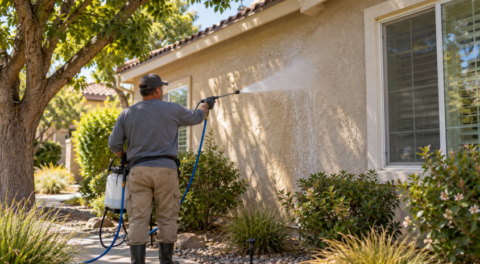
Soft washing uses low-pressure water with cleaning solutions to loosen dirt and organic buildup. It’s often a practical option for sensitive or textured surfaces. Our soft washing service includes stucco among the surfaces we clean.
Pressure washing uses a stronger stream of water and is often used on tougher surfaces. It’s easy to assume that a pressure washer’s setting alone determines whether it suits a particular wall, but the surface condition and the way water reaches the wall matter too. Directing a strong stream at cracks, joints, or openings can force water where it shouldn’t go or damage a finish.
Squeaky Clean also provides pressure washing for listed surfaces including stucco. The right approach depends on the wall and the buildup. Ask the cleaning provider how they plan to protect the stucco and surrounding areas before the work begins.
What to ask before scheduling stucco cleaning
A few questions can clarify whether the service is appropriate for your home:
- Will the walls be inspected for cracks, loose material, or repairs before washing?
- What method do you recommend for this stucco finish, and why?
- How will you handle painted areas, windows, landscaping, and nearby openings?
- What should happen if the inspection reveals damaged stucco?
- Can you explain which marks look removable and which may need repair?
A reliable answer should account for the actual condition of your walls. Be cautious of anyone who recommends the same water pressure and cleaning solution for every home without first looking at the surface.
When to clean only part of the exterior
A full-house wash isn’t always necessary. If soil splash marks the lower wall or a shaded side has visible organic buildup, cleaning a limited area may be enough. Cleaning a small section can also make sense when you’re checking how a particular finish responds.
However, spot cleaning can leave a visible difference between the washed section and the surrounding wall. That’s more likely when the stucco has aged, faded, or collected dirt unevenly. Ask whether the cleaning provider expects the cleaned area to blend with the rest of the exterior.
If buildup appears in one spot repeatedly, look for the cause. A sprinkler aimed at the wall, overflowing gutter, or poor drainage can keep feeding the same stain. Correcting that source may matter as much as washing the stucco.
Keep track of changing conditions
You don’t need a complicated maintenance log. Take a few photos when you inspect the walls and note any changes. The images can help you tell whether a stain is spreading, staying the same, or clearing after seasonal weather.
Keep an eye on areas beneath gutters, around openings, and near irrigation. After storms, check whether water leaves new splash marks or runs down the same sections. If cracks or loose finish grow over time, address the repair before scheduling exterior cleaning.
For homeowners in Roseville and the surrounding area, our Roseville and Placer County service page lists local cleaning services. If your stucco looks dirty but you’re unsure what method fits the surface, contact Squeaky Clean to discuss the property and request a quote.
The best time to clean stucco is when visible buildup warrants it and the wall is in suitable condition for washing. Inspect the exterior seasonally, look for the source of recurring marks, and address damage before cleaning. That gives you a clearer basis for deciding whether the house needs a full wash, a limited cleaning, or a repair first.