
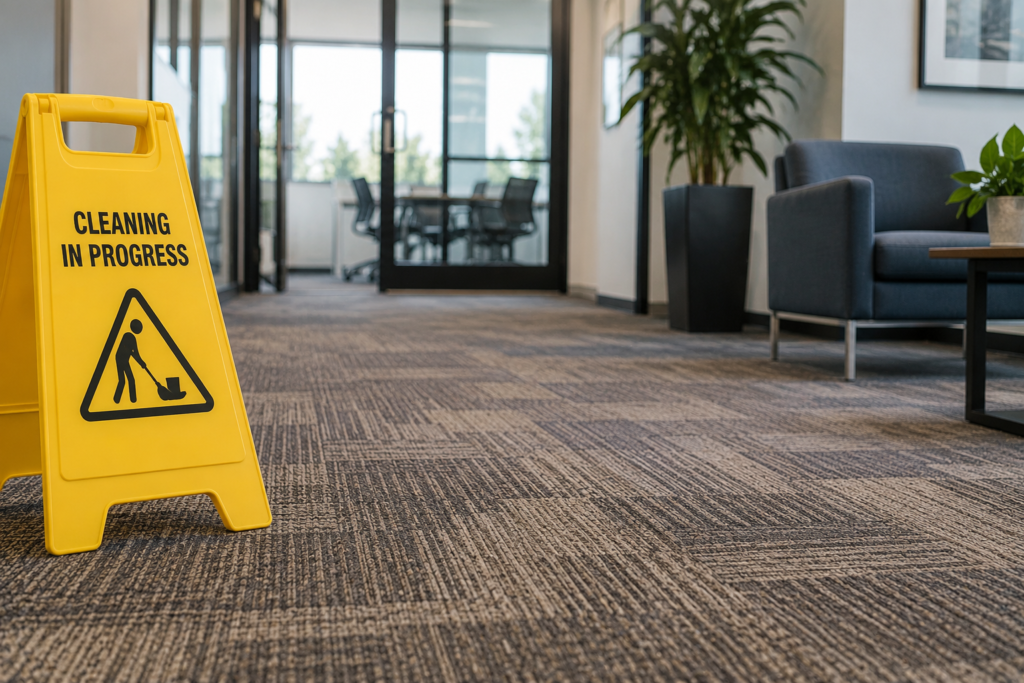
Most commercial carpet needs several hours to dry after professional cleaning, but there isn’t one timeline that applies to every building. Commercial carpet drying time depends on the cleaning method, carpet construction, indoor humidity, airflow, temperature, and how much moisture remains after cleaning. For planning purposes, businesses should limit normal foot traffic until the carpet feels fully dry instead of relying on a guaranteed number of hours.
At Squeaky Clean, we clean carpet and tile in both residential and commercial spaces throughout Roseville and the surrounding service area. If you’re planning service around employees, customers, tenants, or operating hours, drying time deserves attention before the appointment.
What Is a Typical Commercial Carpet Drying Time?
A practical expectation is several hours. Commercial carpet may dry faster in favorable conditions, especially when it has a low pile, the cleaning method uses less moisture, and the building has strong air movement.
Other spaces take longer. Thick carpet, high indoor humidity, limited ventilation, heavy soil that requires more cleaning passes, or excessive moisture can extend the drying period.
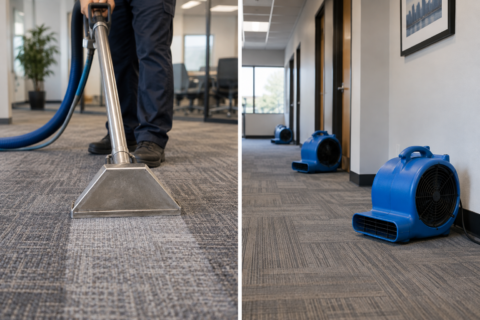
The Carpet and Rug Institute takes a useful approach in its CRI 204 Commercial Carpet Standard for Maintenance and Cleaning. It states that cleaning is not complete until the carpet is dry and ready for traffic. The standard also recommends natural or mechanical ventilation and notes that air movers, HVAC systems, and dehumidifiers reduce drying time.
The carpet is ready when it is dry, not simply because a certain number of hours has passed.
Why the Cleaning Method Changes the Timeline
Different carpet-cleaning methods introduce different amounts of moisture.
Hot water extraction uses water and extraction equipment to loosen and remove soil. Drying time then depends heavily on how effectively the equipment extracts that moisture afterward.
Lower-moisture methods generally require less drying time, although the right method depends on the carpet, its condition, the type of soil, and manufacturer care requirements.
Squeaky Clean’s carpet and tile cleaning service uses professional cleaning and restoration equipment. Since commercial spaces vary, businesses should plan drying time around the actual carpet and building conditions rather than assuming every job will follow the same timeline.
Airflow Has a Major Effect on Drying
Wet carpet dries as moisture moves from the fibers into the surrounding air. Once that air becomes humid, drying slows unless the building moves or removes the moisture.
HVAC circulation, commercial air movers, ceiling fans, and other appropriate ventilation keep air moving across the carpet surface. Dehumidification also matters because drier indoor air accepts moisture more readily than already humid air.
Opening windows is not always the best choice. If outdoor air is humid, bringing more of it inside may slow the process. In many commercial buildings, running the HVAC system and maintaining controlled indoor airflow makes more sense.
Avoid closing a freshly cleaned area with no air circulation. Stagnant, moisture-heavy air slows evaporation.
Carpet Type and Installation Matter Too
A low-pile carpet tile in an office corridor behaves differently from a thicker broadloom carpet in a conference room or hospitality setting.
Pile height affects how much moisture carpet can hold. Dense construction may also take longer to release moisture than a thinner material.
The installation underneath matters as well. Some commercial carpet is glued directly to the floor, while other installations use cushion or different backing systems. Cleaning professionals need to account for those materials rather than treating every carpet the same way.
That is also why “dry to the touch” and “ready for normal business traffic” are not always identical. The surface may feel close to dry while deeper areas still hold moisture.
Humidity and Temperature Change Drying Conditions
Indoor conditions often matter more than people expect.
Warm air supports evaporation, but temperature alone does not guarantee fast drying. A warm, humid room with little airflow may still dry slowly.
Air conditioning often supports drying during warm weather because it removes humidity while circulating air. During cooler conditions, moderate heat combined with airflow may work well.
For a Roseville business, the same carpet could have different drying times at different points in the year. A closed building, an occupied office, and an empty space with active HVAC will each create different conditions.
When Can Employees or Customers Walk on the Carpet?
Wait until the carpet is fully dry whenever possible.
Walking on damp carpet can transfer soil from shoes back into freshly cleaned fibers. Heavy foot traffic can also compress damp pile and leave paths through areas that were just cleaned.
Furniture presents another issue. Metal legs, wood finishes, dyes, or other materials can sometimes transfer color or leave marks when they sit directly on damp carpet. If furniture must return before everything has fully dried, protective tabs or blocks may be appropriate depending on the item and flooring.
For businesses, scheduling often solves much of this. Cleaning after closing, before a weekend, or during a low-traffic period gives the carpet a longer uninterrupted drying window.
What If the Carpet Is Still Damp the Next Day?
Carpet that remains noticeably wet much longer than expected deserves attention.
Start by checking airflow. Is the HVAC system running? Is the room closed off? Does the space feel humid? Are fans or air movers operating where appropriate?
Persistent dampness can also point to too much moisture during cleaning, poor extraction, a dense carpet, or conditions beneath the surface that are slowing the process.
Do not cover damp carpet with rugs, plastic floor protection, or furniture and assume it will finish drying underneath. Coverings restrict evaporation.
If a professionally cleaned carpet still feels wet beyond the expected drying window, contact the cleaning company and describe the conditions. The carpet, cleaning method, and building environment all matter when deciding what to do next.
How Businesses Can Plan Around Commercial Carpet Cleaning
A little scheduling makes drying much less disruptive.
Before the appointment, identify the areas that must reopen first. Reception areas, hallways, entrances, workstations, and customer-facing spaces may need different timing than storage rooms or private offices.
Ask about expected drying conditions for the specific carpet rather than requesting a universal estimate. Make sure the HVAC system can remain on if needed, and avoid scheduling furniture moves immediately after cleaning.
For larger properties, cleaning in sections may make sense. One area can dry while another remains available for normal use.
Squeaky Clean serves homes and businesses through our Roseville and Placer County cleaning services, including carpet and tile cleaning. If timing is a concern, tell us how the space is used so the appointment can be planned around the property’s access needs.
Plan for Dry Carpet, Not Just a Finished Appointment
Commercial carpet drying time depends on the carpet, cleaning method, moisture level, airflow, humidity, and building conditions. Several hours is common, but the carpet itself should determine when normal traffic resumes.
Give the area enough airflow, keep unnecessary traffic off the carpet, and avoid replacing furniture before the flooring has dried properly. Those steps protect the freshly cleaned surface and reduce the chance of creating new marks.
If your business in Roseville or the surrounding area needs professional carpet cleaning, contact Squeaky Clean to discuss the space and request a quote. If your schedule is tight, mention your operating hours and access needs so drying time can be part of the plan from the beginning.