
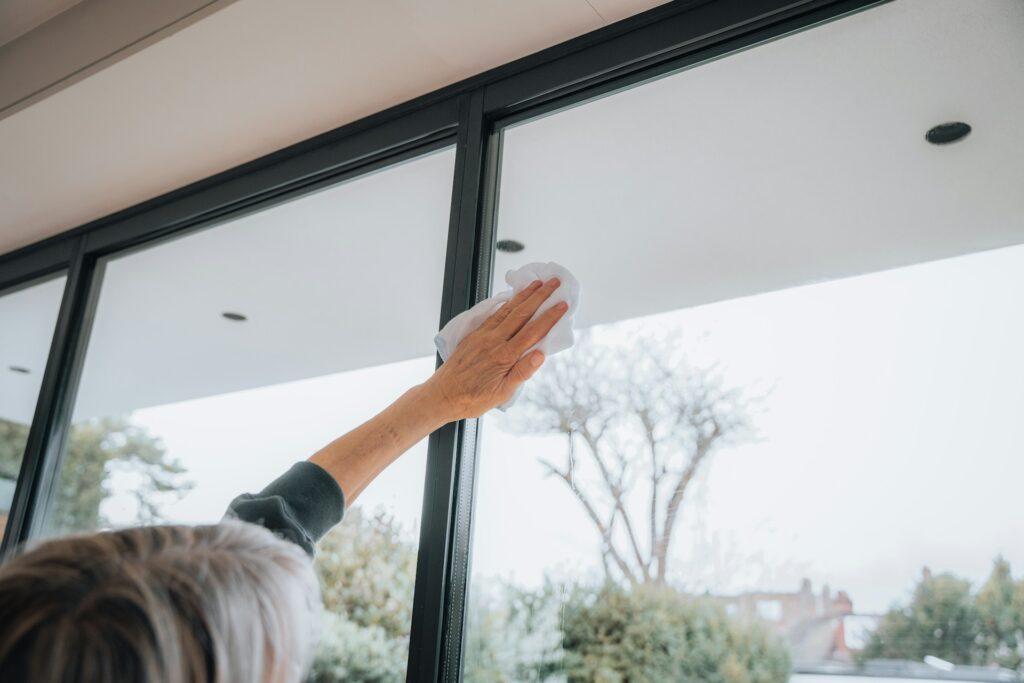
Window cleaning in Roseville often involves more than removing dust and fingerprints. Hard water spots are common because minerals are left behind when water dries, especially on windows near lawns, planting beds, pools, and sprinkler systems.
What starts as a light haze can gradually turn into stubborn marks that regular glass cleaner barely touches. The good news is that they’re often removable once the root cause is figured out.
What Are Hard Water Spots?
Hard water contains dissolved minerals, primarily calcium and magnesium. When water lands on glass and evaporates, the water disappears but the minerals stay behind.
At first, the residue may look like small white circles. As more water hits the same area, those deposits overlap and build into a cloudy film.
That’s why repeatedly spraying a spotted window with ordinary glass cleaner doesn’t always work. Glass cleaner is made for fingerprints, dust, and surface grime. Mineral buildup is a different problem.
The U.S. Geological Survey classifies water based on its concentration of minerals. Water containing 61 to 120 milligrams per liter of hardness is considered moderately hard. Anything above 180 milligrams per liter is considered very hard.
Is Roseville’s Water Really That Hard?
Roseville’s water is a little more complicated than a simple yes or no.
The city used both Folsom Lake surface water and groundwater during 2025. According to Roseville’s most recent water quality report, Folsom Lake water had a total hardness of 26 parts per million. That falls within the USGS soft-water range.
Roseville’s groundwater averaged 95 parts per million, which is considered moderately hard. Individual groundwater samples ranged from 31 to 280 parts per million, extending from soft all the way into the very-hard range depending on the property.
This explains why one Roseville homeowner may deal with constant spotting while someone a few neighborhoods away barely notices it.
Why Do Certain Windows Get Worse Hard Water Spots?
The water itself is only part of the problem. Where the water lands and how long it remains on the glass matter just as much.
Sprinklers Hitting the Glass
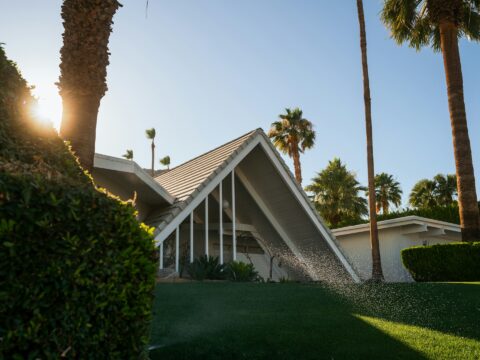
Sprinkler overspray is one of the biggest causes of exterior window spots.
A sprinkler may only hit the glass for a few minutes each morning, but that still leaves hundreds of droplets behind. Once those droplets dry, a thin layer of minerals remains. The process repeats the next time the sprinklers run.
Windows facing a lawn or landscaped side yard usually show the worst buildup. Lower windows often get hit harder than second-story glass.
Watch your sprinklers through one full cycle. A tilted sprinkler head, damaged nozzle, or poor watering angle may be spraying much farther than you realize.
Hot, Dry Roseville Summers
Roseville has hot, dry summers, with average monthly maximum temperatures in recent years reaching the mid-90s. Water on sun-facing glass can dry quickly under those conditions.
Fast evaporation leaves less time for water to run off naturally. Each droplet dries where it landed, leaving a clearly defined mineral ring behind.
South-facing and west-facing windows often get the most direct afternoon heat, so spots on those sides of the home may become noticeable faster.
Pool and Hose Water
Windows near swimming pools may be exposed to splashing, cleaning, and nearby irrigation. Washing siding, rinsing patio furniture, or spraying down a walkway may also send untreated hose water onto the glass.
The window may look clean while it’s wet. The spots become visible once everything dries.
Buildup That Has Been Sitting for Months
Fresh mineral residue is generally easier to remove when window cleaning than buildup that has gone through an entire Roseville summer.
Once multiple layers accumulate, wiping the window with a wet towel usually isn’t enough. Some neglected glass develops a rough or cloudy appearance even after surface dirt has been removed.
At that point, the window needs a cleaning method that addresses the mineral deposits instead of treating them like ordinary grime.
Can Regular Window Cleaning Remove Hard Water Spots?
Usually not. Standard window cleaner works well for dust, fingerprints, pollen, and oily residue. It may temporarily make mineral spots less visible, but the marks often return as soon as the glass dries.
That happens because the cleaner removed the dirt around the deposit without dissolving the deposit itself. Hard water stains generally respond better to an acidic cleaning solution. The USGS notes that vinegar’s acidity dissolves mineral particles, which is why it is commonly used against light scale.
Still, stronger isn’t automatically better. Abrasive pads, harsh chemicals, and scraping tools can damage certain types of glass, window coatings, frames, and surrounding surfaces.
How to Remove Light Hard Water Spots From Windows
A mild vinegar solution is a reasonable starting point for fresh, limited spotting on standard, uncoated glass.
Mix equal parts white vinegar and water in a spray bottle. Apply it to a small test area and let it sit for several minutes so the solution has time to work on the residue.
Wipe the area with a clean microfiber cloth or nonabrasive sponge. Rinse it with clean water, then dry the glass with a squeegee or fresh towel.
A few practical tips make the job easier:
- Work while the glass is cool, not in direct afternoon sun.
- Keep the solution wet long enough to loosen the deposits.
- Don’t scrub dry glass.
- Test any cleaner before applying it across the full window.
- Check the window manufacturer’s instructions if the glass has tinting, reflective film, or another specialty coating.
Avoid reaching high exterior windows from an unstable ladder. A stubborn water spot isn’t worth a fall.
When Professional Window Cleaning Makes Sense
DIY cleaning is reasonable for a few light spots on an accessible window. It becomes less practical when the buildup covers several windows, sits on second-story glass, or returns after repeated cleaning.
Professional window cleaners can identify the difference between ordinary grime, mineral residue, and possible glass damage, and we also have equipment for reaching upper windows and cleaning larger areas evenly.
Cleaner Windows Start With Fixing the Source
Removing the spots is only half the job. If the sprinklers keep hitting the same window every morning, the residue will return.
Start by adjusting any sprinkler heads aimed toward the house. A small change in direction may keep water on the landscaping and off the glass. Check for overspray again when it’s windy, water that normally stays within the lawn may drift onto nearby windows during breezy conditions.
Squeaky Clean Tip: After using a hose near the house, rinse the window with purified water or dry the glass before the droplets bake in the sun. This is especially useful around patios, pools, and outdoor kitchens.
How to Keep Hard Water Spots From Returning
Regular window cleaning keeps Roseville’s thin mineral residue from turning into a heavier layer, especially in Roseville. The ideal schedule depends on the property, but windows exposed to irrigation usually need attention sooner than protected glass under a deep roofline.
Roseville’s changing water sources, outdoor irrigation, and hot summer weather create plenty of opportunities for hard water spots to develop. Once you figure out where the water is coming from, keeping the glass clear becomes much easier.
For hard-to-reach windows or mineral buildup that won’t come off with normal cleaning, Squeaky Clean provides residential and commercial window cleaning throughout Roseville and Placer County. Contact us for professional window cleaning in Roseville or call (916) 939-0162 to request a quote.